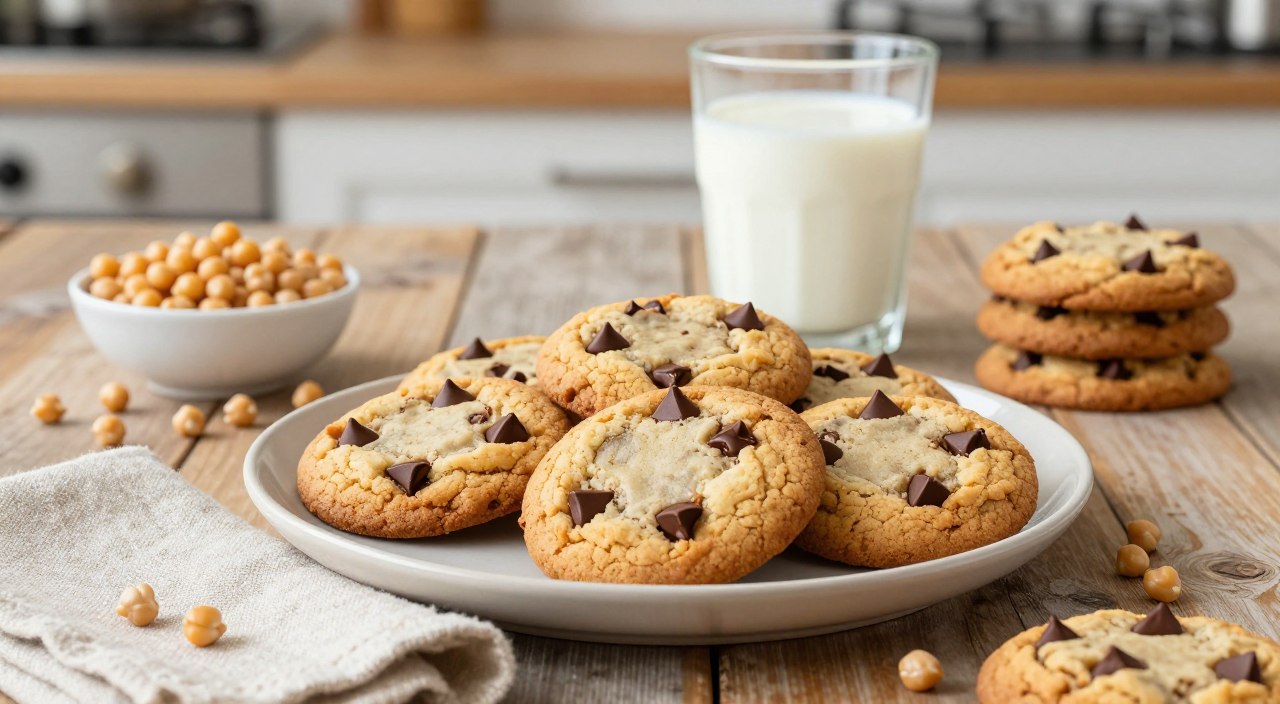
Remember the warm, comforting smell of chocolate chip cookies baking in your grandma’s kitchen? That feeling of pure joy is something we all cherish. Now, imagine recreating that same magic, but with a wholesome twist that feels good for your body and values.
You are about to discover an incredible recipe that transforms a classic treat. This version swaps out traditional ingredients for something surprisingly simple: chickpeas. They create a perfect, soft, and chewy texture without any eggs or dairy.
This isn’t about giving up the treats you love. It’s about making them even better. Chickpeas quietly add protein and fiber, turning your favorite indulgence into a more nourishing snack. The result is a bakery-quality dessert that everyone will adore.
Whether you follow a plant-based lifestyle or just love delicious food, this guide will show you how easy it is. You can achieve that perfect combination of crispy edges and a soft center with ingredients already in your pantry. Get ready to bake something truly special.
Introduction: A New Twist on Vegan Chocolate Chip Cookies With Chickpeas
Have you ever shared a plate of freshly baked treats with friends, only to discover they were completely plant-based? You’re part of a growing movement of home bakers creating desserts that surprise everyone. These creations often taste identical to traditional versions, sometimes even better.
The secret lies in thoughtful ingredient swaps. Chickpeas provide the perfect texture while adding protein and fiber. This means your favorite indulgence becomes more nourishing.
Embracing a Friendly Vegan Lifestyle
Your plant-based choices don’t mean sacrificing warm, gooey delights from the oven. This approach to baking focuses on inclusion rather than restriction. You can offer amazing treats that happen to align with your values.
Recipe developers often test their formulas seven times or more. They perfect the balance until the results fool even picky eaters. The dedication pays off with creations that become new favorites.
When you serve these chocolate-studded wonders, prepare for compliments. People frequently say they’re the best they’ve ever tasted. The rich flavor and satisfying texture make them universally beloved.
Vegan Cookies Fundamentals: Essential Ingredients & Tools
Quality ingredients are the building blocks that determine whether your treats become memorable or mediocre. Your selection of components directly shapes the final texture and flavor. Understanding each item’s role ensures baking success.
Chickpeas as a Surprising Protein Boost
Chickpeas provide a remarkable protein boost in this recipe. They create moisture and binding properties similar to eggs. When properly processed, they add nutritional value without any bean flavor.
This unexpected ingredient transforms the texture completely. It gives your creation a soft, chewy consistency that everyone loves.
Selecting High-Quality Vegan Chocolate and Coconut Oil
Your fat source choice matters greatly. You can use either vegan butter or coconut oil. Coconut oil creates slightly crispier results with a subtle tropical note.
For less coconut flavor, choose refined coconut oil. Brands like Enjoy Life offer excellent vegan chocolate chips. Or chop chocolate bars into chunks for gourmet texture.
All-purpose flour delivers classic texture. Gluten-free alternatives like King Arthur’s blend also work well. Pure vanilla extract makes a noticeable difference in flavor depth.
You’ll want both fine kosher salt in the dough and flaky sea salt for topping. This creates that sophisticated sweet-salty contrast. Essential tools include a large mixing bowl, measuring cups, and parchment-lined baking sheets.
Crafting Your Chickpea-Infused Cookie Dough
Building the foundation for your baked treats starts with mastering the dough consistency. This process transforms simple pantry staples into something magical.
Begin by processing chickpeas until completely smooth. This crucial step ensures no grainy texture remains. The chickpeas will blend seamlessly into your batter.
Mixing Wet and Dry Ingredients for the Perfect Consistency
In your large bowl, beat together coconut oil or vegan butter with brown sugar. Continue until the mixture becomes light and fluffy. This incorporates air that helps create wonderful texture.
Brown sugar is specifically chosen over white granulated sugar. Its molasses content adds moisture and creates chewiness. It also contributes to that beautiful golden-brown color.
Next, add your liquid ingredients including vanilla extract and plant-based milk. Mix until everything is thoroughly combined. The processed chickpeas get incorporated at this stage.
In a separate bowl, whisk together your dry ingredients—flour, baking soda, and salt. Gradually add them to the wet mixture to prevent overmixing. This prevents tough results.
Your finished cookie dough should have the perfect consistency. It should be soft and slightly tacky but not sticky. The dough should hold its shape when scooped.
If your dough feels too sticky, add flour one tablespoon at a time. If it’s too dry, add a teaspoon of milk and mix again. Achieving that ideal cookie dough texture ensures successful baking.
Step-by-Step: How to Form and Shape Your Dough
Shaping your dough properly is the key to achieving bakery-perfect results every time. This stage transforms your mixture into individual portions that promise consistent baking.

Forming Consistent Cookie Balls
Using a cookie scoop creates perfectly uniform portions that bake evenly. A large scoop makes impressive bakery-style treats, while smaller ones yield traditional sizes.
Scoop your dough and gently roll each portion between your palms. This creates smooth, round spheres that spread evenly during baking. For that picture-perfect look, press extra chocolate chip pieces into the tops before they go in the oven.
Adjusting the Dough for Different Cookie Sizes
Leave at least 2 inches between each cookie dough ball on your baking sheet. They need space to spread without merging together. The recipe typically yields 16-20 treats depending on your chosen size.
Smaller portions bake quickly—check around 6-8 minutes. Larger ones might need 12-14 minutes. You can bake multiple sheets at once, but for best results, bake one sheet at a time on the middle rack.
Your shaped treats don’t require chilling time, so you can go from mixing bowl to oven quickly. This is a major time-saver when you’re craving fresh-baked goodness.
Baking Techniques: Achieving the Perfect Texture
The magic truly happens when your creation meets the heat. Mastering your oven’s behavior is the final step to bakery-level results. A few simple techniques ensure that ideal combination of crispiness and chewiness.
Optimal Oven Temperature and Timing Tips
Always preheat your oven to 375°F before you begin. This slightly higher temperature is the secret to crispy edges with a soft center. It gives your treats a quick start, setting the outside while the inside stays tender.
Line your baking sheet with parchment paper for even heat distribution. Place the sheet on the middle rack for the most consistent baking. The ideal time is typically 9 to 12 minutes.
Avoiding Overbaking: Achieving Crispy Edges with a Chewy Center
Watch your cookie closely as it bakes. The edges should turn a light golden brown. The center will still look soft and slightly underdone. This is perfect! They continue to cook on the hot baking sheet after removal.
Resist the urge to leave them in longer. Overbaking is the most common mistake. Your chocolate chip delights will firm up as they cool for about 15 minutes. This resting period develops the final, chewy texture everyone loves.
Enhancing Flavor: Sweeteners, Spices, and Vegan Butter Alternatives
Your choice of ingredients can transform a simple recipe into an extraordinary culinary experience with just a few thoughtful selections. The foundation of any great dessert lies in how you balance sweetness, richness, and texture.
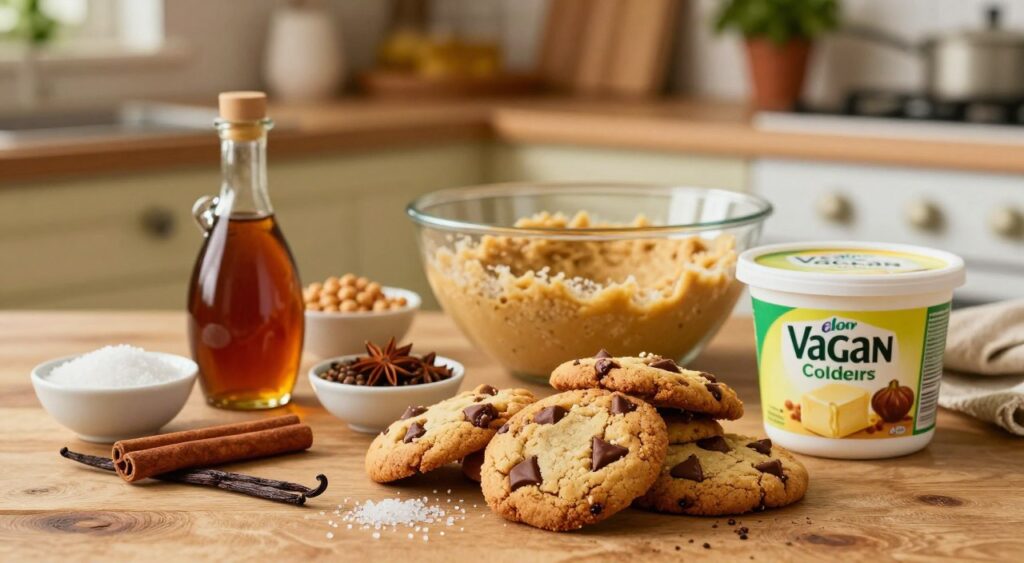
Understanding how each component contributes to the final result helps you create treats that stand out. Let’s explore how to maximize flavor through smart ingredient choices.
Balancing Brown Sugar, Vanilla, and Optional Add-Ins
Brown sugar is your secret weapon for achieving that perfect chewy texture. Its molasses content adds moisture and creates a beautiful golden color. If you only have granulated sugar, try a 50/50 blend with brown for similar results.
Pure vanilla extract makes a noticeable difference in flavor depth. Always choose authentic versions over imitation for that rich, warm taste that complements chocolate perfectly.
Your fat selection significantly impacts both texture and taste. High-quality vegan butter alternatives like Earth Balance deliver results closest to traditional butter. Coconut oil creates a crisper texture with subtle tropical notes.
Salt plays a dual role in your creation. Fine salt mixed into the dough balances sweetness, while flaky sea salt sprinkled on top creates sophisticated contrast.
Get creative with add-ins like toasted coconut flakes or chopped nuts. Press extra chocolate chips onto warm treats right from the oven for picture-perfect results. Your personal touches make each batch uniquely delicious.
Troubleshooting & Customizing Your Vegan Cookies Recipe
Even the most experienced bakers encounter occasional challenges when working with new recipes. Understanding how to adjust your approach ensures perfect results every time.
Adjusting Dough Consistency: Too Sticky or Too Dry?
Your dough should feel soft but not mushy, firm but not hard. If it clings excessively to your hands, gradually add more flour one tablespoon at a time.
When your mixture appears too dry or crumbly, add liquid like non-dairy milk one teaspoon at a time. This usually happens when flour gets accidentally overmeasured.
Make sure your butter or coconut oil reaches the right temperature before starting. Room temperature means cool to the touch but easily scoopable. If your mixture feels greasy during creaming, your butter was too warm.
Simply cover the bowl and place it in the fridge for 15-20 minutes until it firms up. Cookies that don’t spread enough typically indicate too much flour or reduced sugar amounts.
Exploring Creative Flavor Variations and Mix-Ins
You can completely customize this recipe by substituting different non-dairy milks. Try soy, oat, or almond varieties for subtle flavor changes.
Experiment with various vegan chocolate brands or add a cup of chopped nuts or dried fruit. For gluten-free versions, King Arthur’s measure-for-measure flour works well as a direct substitute.
The cookie dough freezes beautifully for up to 2 months. Roll into balls, freeze on a baking sheet, then transfer to an airtight container. Bake directly from frozen with 2-3 extra minutes added to baking time.
Final Sweet Touches: Serving Ideas and Storage Tips
Your freshly baked creations deserve the perfect finishing touches to make them truly special. The right cooling and presentation techniques will showcase your baking masterpiece.
Let your treats rest on the baking sheet for 15 minutes after they come out of the oven. This allows them to set properly. Then transfer them to a cooling rack for another 15 minutes to achieve the ideal texture.
While still warm, press extra chocolate pieces onto the top surface. A light sprinkle of flaky sea salt creates that gourmet sweet-salty contrast everyone loves.
For creative serving ideas, try making ice cream sandwiches with your favorite dairy-free frozen dessert. You can also crumble them over yogurt or pack them in lunchboxes.
Store your baked goods in an airtight container at room temperature for up to 5 days. For longer storage, refrigerate for 2 weeks or freeze for 1-2 months. They actually improve in flavor after a day as the ingredients meld together.
This plant-based recipe offers allergy-friendly indulgence with the satisfying texture of traditional favorites.
FAQ
Can I use canned chickpeas for this recipe?
Yes, canned chickpeas work perfectly. Just make sure to rinse and drain them well before adding them to your mixing bowl. This removes excess sodium and gives you a clean flavor base for your dough.
My dough is too sticky to handle. What should I do?
If your mixture is too sticky, try chilling it in the fridge for about 30 minutes. This helps the coconut oil and other ingredients firm up, making it much easier to roll into consistent balls for baking.
What’s the best type of chocolate to use?
For the richest flavor, choose a high-quality dark chocolate bar chopped into chunks, or use dairy-free chocolate chips. Brands like Enjoy Life or Lily’s offer great options that melt beautifully and provide a deep, satisfying flavor.
How do I know when the cookies are done baking?
They are ready when the edges are golden brown and firm, but the centers still look a little soft. They will continue to set as they cool on the baking sheet. This is the key to achieving that perfect chewy center with crispy edges.
Can I make the dough ahead of time?
Absolutely! You can prepare the dough, cover it tightly, and store it in the refrigerator for up to 2 days before baking. This can even enhance the flavor as the ingredients have more time to meld together.
Can I substitute the brown sugar with another sweetener?
You can experiment with coconut sugar or maple syrup, but keep in mind that this will change the texture. Brown sugar helps create a moist and chewy result, so liquid sweeteners might make the final product a bit cakier.