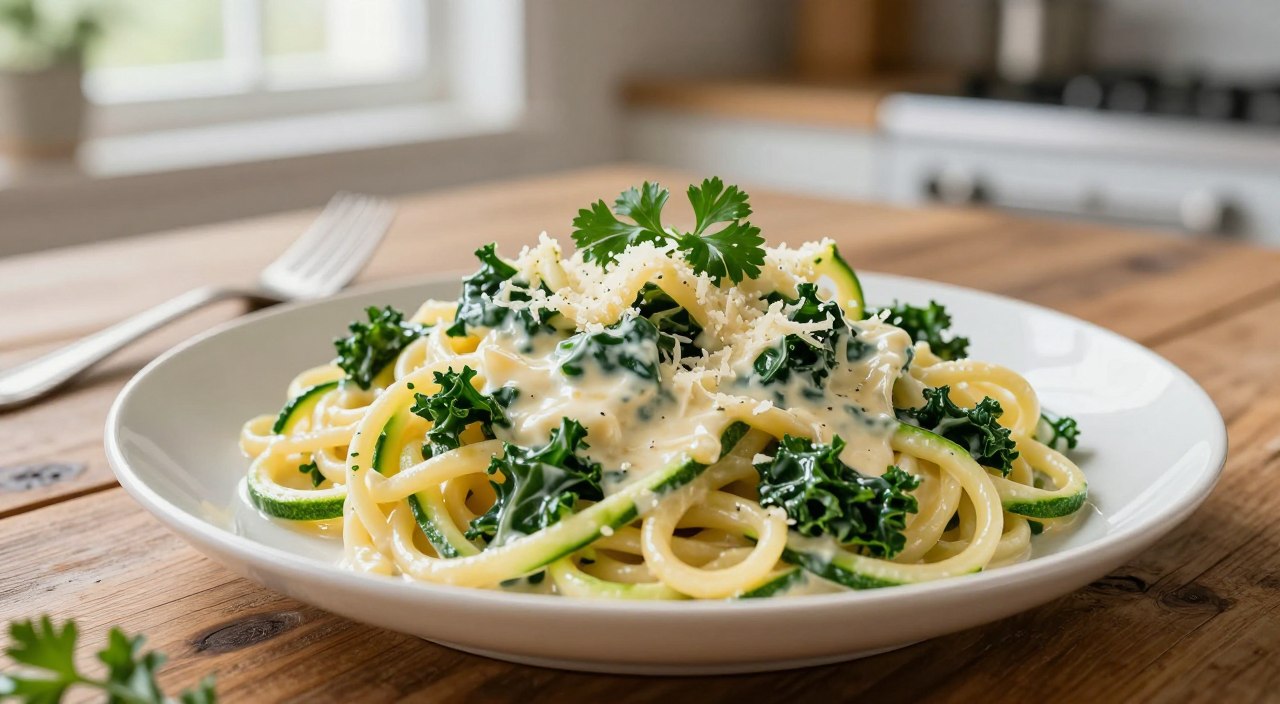
Do you ever crave that rich, creamy comfort of a classic pasta dish but wish it could be healthier? We know that feeling all too well. It’s the tug-of-war between wanting something indulgent and needing something nutritious, especially on a busy weeknight.
What if you could have both? This is where a simple vegetable can completely change your dinner game. Transforming fresh produce into zucchini noodles opens up a world of delicious, low-carb possibilities.
This particular recipe is a triumph of flavor and nutrition. It combines the velvety texture of Alfredo sauce with the clever addition of hidden greens. You get all the comfort without any of the guilt.
Forget the soggy, store-bought versions. Freshly made zucchini offers a vibrant, satisfying texture that truly stands in for traditional pasta. The best part? You can create this entire restaurant-quality meal in about 20 minutes.
Get ready to fall in love with a dish that satisfies your deepest cravings while fueling your body the right way. Let’s make a meal that everyone at your table will ask for again and again.
Why Low-Carb Zoodle Alfredo Is a Game-Changer
What if your favorite creamy pasta dish could actually support your health goals instead of working against them? This recipe proves that comfort food and nutrition can go hand in hand. You get to enjoy rich, satisfying flavors while making a smart choice for your body.
The numbers tell an impressive story. A serving of traditional pasta packs around 200 calories and over 40 grams of carbs. Compare that to vegetable-based zoodles, which contain just 20 calories and 4 grams of carbohydrates. That’s a dramatic reduction that adds up over time.
These healthy alternatives are naturally packed with essential nutrients. They deliver vitamin C, potassium, and fiber that traditional pasta lacks. This makes them perfect for blood sugar management or ketogenic diets.
The beauty of this recipe lies in its versatility. Your cooking can easily adapt to vegetarian, gluten-free, or dairy-free preferences. The hidden greens blend seamlessly into the creamy sauce, boosting nutrition without altering the classic pasta experience.
Unlike heavy traditional dishes that leave you feeling sluggish, this zoodle Alfredo provides sustained energy. You’ll finish your meal feeling satisfied but light, ready to tackle whatever comes next in your day.
Essential Tools for Making Zucchini Noodles
Before you dive into creating your low-carb masterpiece, let’s explore the tools that make the process smooth and efficient. The right equipment transforms vegetable preparation from a chore into a creative joy.

Choosing the Right Spiralizer or Alternative Tools
Countertop spiralizers offer the most consistent results for making vegetable strands. Look for models with sharp blades and secure clamping systems. These devices create beautiful, uniform ribbons with minimal effort.
For smaller kitchens, handheld spiralizers provide excellent value. They’re compact and easy to store. Some even come with multiple blade options for different thicknesses.
If you don’t have a spiralizer, a simple vegetable peeler works wonderfully. You can create wide, flat ribbons that resemble fettuccine. A julienne peeler produces thinner, spaghetti-like strands.
Resourceful Techniques for Freshly Cutting Zucchini
Select firm, fresh produce with smaller diameters for the best texture. These create sturdier strands that hold their shape during cooking. Always trim both ends first to create flat surfaces.
Center your vegetable properly on the spiralizer to maximize yield. This technique gives you more of the desirable outer strands that include the nutritious skin. The skin adds better texture and visual appeal.
After spiralizing, cut the long strands to about 12 inches for easier handling. Don’t discard the cores—they’re perfect for smoothies, stir-fries, or soups. This approach minimizes waste while maximizing your ingredients.
You can prepare these vegetable strands 3-4 days ahead. Store them in airtight containers with paper towels to absorb excess moisture. This planning makes weeknight meals incredibly fast and convenient.
Step-by-Step Guide to Creating Your Zoodle Alfredo
The magic happens when you combine fresh vegetables with a creamy, homemade sauce in this straightforward process. This recipe guides you through each essential step for perfect results every time.
You’ll be amazed how quickly everything comes together. Most of the work happens in just a few minutes.
Preparing Your Zucchini and Hidden Greens
Start with firm, fresh vegetables that spiralize beautifully. Cut your zucchini into uniform strands using your preferred tool.
For the hidden greens, blend fresh spinach or kale until smooth. This creates a nutrient-packed base that blends seamlessly into your final dish.
Mixing Up the Alfredo Sauce
Begin your sauce by gently melting butter over medium heat. Add minced garlic and let it become fragrant.
Pour in your cream and blended greens mixture. Stir constantly as the sauce thickens. This takes about 5-10 minutes.
The perfect consistency coats the back of a spoon. If needed, a cornstarch slurry can help thicken it further. Your delicious recipe is nearly complete!
Secrets to a Creamy Alfredo Sauce with Hidden Greens
What separates an ordinary Alfredo from an extraordinary one is the artful integration of hidden ingredients. Mastering this technique transforms your sauce into something truly special. You get all the rich creaminess with bonus nutrition.
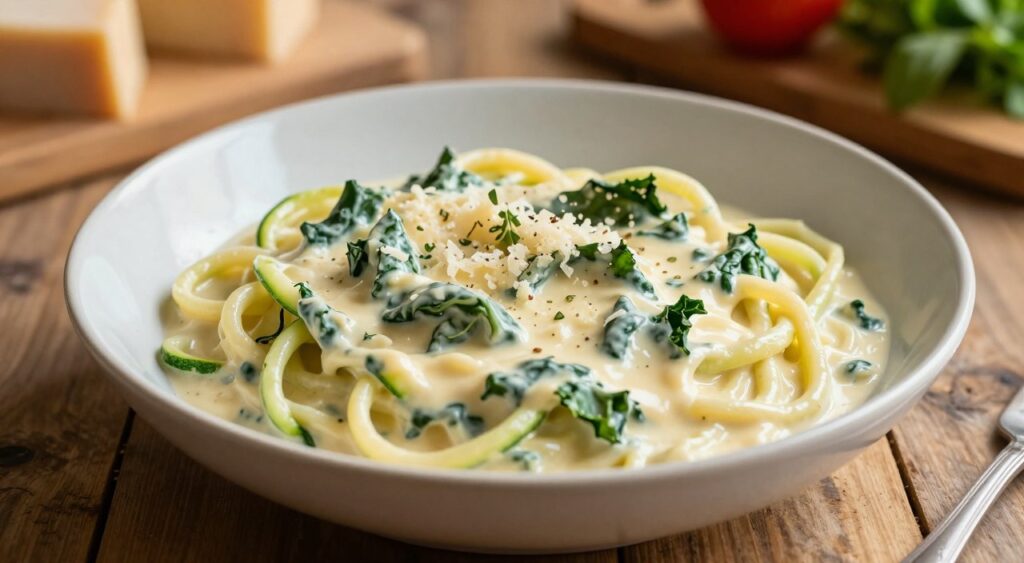
Incorporating Fresh Herbs and Hidden Veggies
Fresh garlic forms the flavor foundation of any great Alfredo. Mince it finely and cook gently until fragrant. Burnt garlic creates bitterness, so watch it carefully.
Leafy greens like spinach blend seamlessly into your cream base. Use a high-powered blender for smooth integration. This creates an invisible nutrition boost that picky eaters won’t detect.
Experiment with different veggies beyond traditional greens. Pureed cauliflower adds creaminess while maintaining the classic white color. White beans offer extra protein without altering the beloved Alfredo taste.
Add fresh herbs at the very end of cooking. Basil leaves torn right before serving preserve their bright, aromatic flavor. They create beautiful green flecks throughout your sauce.
Parsley or mint offer unexpected dimensions that complement the richness. The key is balancing these additions so they enhance rather than overwhelm. Your final sauce should still deliver that comforting, indulgent experience everyone loves.
Expert Tips to Prevent Watery Zucchini Noodles
Nothing ruins a beautiful Alfredo dish faster than watery vegetable noodles pooling at the bottom of your bowl. Mastering moisture control transforms your cooking experience from frustrating to fantastic.
Proper Draining and Sautéing Techniques
The salt-and-drain method works wonders for removing excess water. Simply toss your raw vegetable strands with salt and let them rest in a colander for 20-30 minutes. Gently squeeze out the released liquid before rinsing off the excess salt.
When it’s time to cook, use a heavy pan over medium-high heat. Cast iron works brilliantly for even heat distribution. Cook your vegetable strands for just 3-4 minutes—this brief cooking time preserves their perfect al dente texture.
Never cover the pan while cooking zoodles. Trapped steam encourages more water release. Work quickly and have your sauce ready to toss everything together immediately after cooking.
The oven method offers superior moisture control. Spread your strands on a large baking sheet at 350°F for about 15 minutes. This allows natural evaporation. Pat them dry after baking for the best results.
If you notice excess liquid in your pan, don’t worry. A quick cornstarch slurry can transform it into a silky sauce addition. Remember to taste before adding more salt since you salted during the draining stage.
Flavor Boosters and Creative Add-Ins for Your Pasta
Elevating your dish with thoughtful additions creates layers of flavor that will impress even the most discerning palate. The right finishing touches transform your healthy creation into something truly special.
These simple enhancements make each bite more complex and satisfying. They’re the secret to turning a good meal into an unforgettable one.
Enhancing the Dish with Parmesan and Olive Oil
Freshly grated Parmesan cheese is absolutely essential for authentic Alfredo richness. It melts smoothly into your sauce, unlike pre-shredded varieties that contain anti-caking agents.
Use about ½ cup of shredded Parmesan for the sauce, plus extra for topping. This generous amount creates that classic creamy texture while adding protein to your meal.
High-quality extra-virgin olive oil adds fruity notes that complement the creaminess perfectly. Drizzle this oil over your finished dish to help the sauce cling beautifully to each strand.
Cooking your garlic in olive oil at the beginning infuses incredible flavor throughout the entire dish. Freshly cracked black pepper adds subtle warmth that cuts through the richness.
For extra dimension, consider sun-dried tomatoes or sautéed mushrooms. A pinch of crushed red pepper flakes provides gentle heat without overwhelming other flavors.
Protein additions like grilled chicken or shrimp transform this into a complete meal. Each creative add-in makes your zucchini creation more personalized and delicious.
Meal Prep and Storage Tips for Zucchini Noodles
Learning how to store your spiralized creations properly ensures they stay fresh and ready for quick meals. With smart techniques, you can enjoy your low-carb dishes throughout the week without sacrificing quality.
Proper planning saves valuable time during busy weekdays. These methods keep your vegetable strands at their best.
Smart Storage for Raw and Cooked Zoodles
Fresh zucchini noodle preparations last 3-4 days in the refrigerator. Store them in airtight containers with paper towels to absorb moisture.
For cooked versions, consume them within 2 days for optimal texture. Reheat gently to avoid making them too soft.
Freezing and Reheating Without Compromising Texture
Freezing raw vegetable strands requires careful preparation. Blanch them in boiling water for 30 seconds first.
After blanching, rinse with cold water immediately. Pat them completely dry before spreading on a parchment-lined baking sheet.
Freeze until solid, which takes several hours. Then transfer to freezer bags for up to 6 months.
Thaw overnight in the refrigerator for best results. The texture will be softer than fresh, but perfect for saucy dishes.
Remember that cooked zucchini noodle dishes don’t freeze well. Freeze the sauce separately and prepare fresh strands when ready to eat.
This approach saves time while maintaining quality. Your baking sheet method prevents clumping during the freezing process.
Final Thoughts on Elevating Your Pasta Experience
Your kitchen adventures with vegetable spirals have just begun. You now possess the skills to create perfect strands every time.
The true beauty lies in their incredible versatility. Apply these techniques to transform your favorite pasta recipes, from Italian classics to Asian-inspired bowls.
Don’t stop at one type of vegetable. Experiment with squash or sweet potato for new textures. The best way to enjoy this cooking style is through creative exploration.
Making zucchini spirals at home is genuinely fun and rewarding. Remember, practice makes perfect. These tips are foundational skills for countless healthy meals ahead.
Your approach to vegetable-based dishes will change. You’ve discovered a simple, delicious recipe for success that goes far beyond a single meal.
FAQ
What’s the best way to make zucchini noodles without a spiralizer?
You can use a julienne peeler to create thin, pasta-like strips. A standard vegetable peeler works for wider ribbons, or you can carefully use a sharp knife to cut the squash into thin matchsticks.
How do I keep my zoodles from getting watery when I cook them?
The key is to remove excess moisture before cooking. After spiralizing, toss the strands with a little salt and let them sit for 10-15 minutes. Then, gently squeeze them in a clean kitchen towel to release the water before sautéing them quickly in a hot pan with olive oil.
Can I meal prep zucchini noodles ahead of time?
Absolutely! For best results, store raw zoodles in an airtight container in the fridge for up to 3 days. To prevent sogginess, place a paper towel in the container to absorb any moisture. It’s best to cook them just before serving for the ideal texture.
What can I add to my Alfredo sauce for a flavor boost?
Freshly grated Parmesan cheese is a must for a rich, savory depth. A splash of high-quality extra virgin olive oil stirred in at the end adds fruity notes. Don’t forget fresh herbs like basil or a pinch of black pepper to brighten everything up.
Is it possible to freeze cooked zucchini noodles?
Freezing is not recommended, as the high water content will cause the squash to become very mushy upon thawing. For meal prep, it’s much better to store them raw in the refrigerator and cook them when you’re ready to eat.